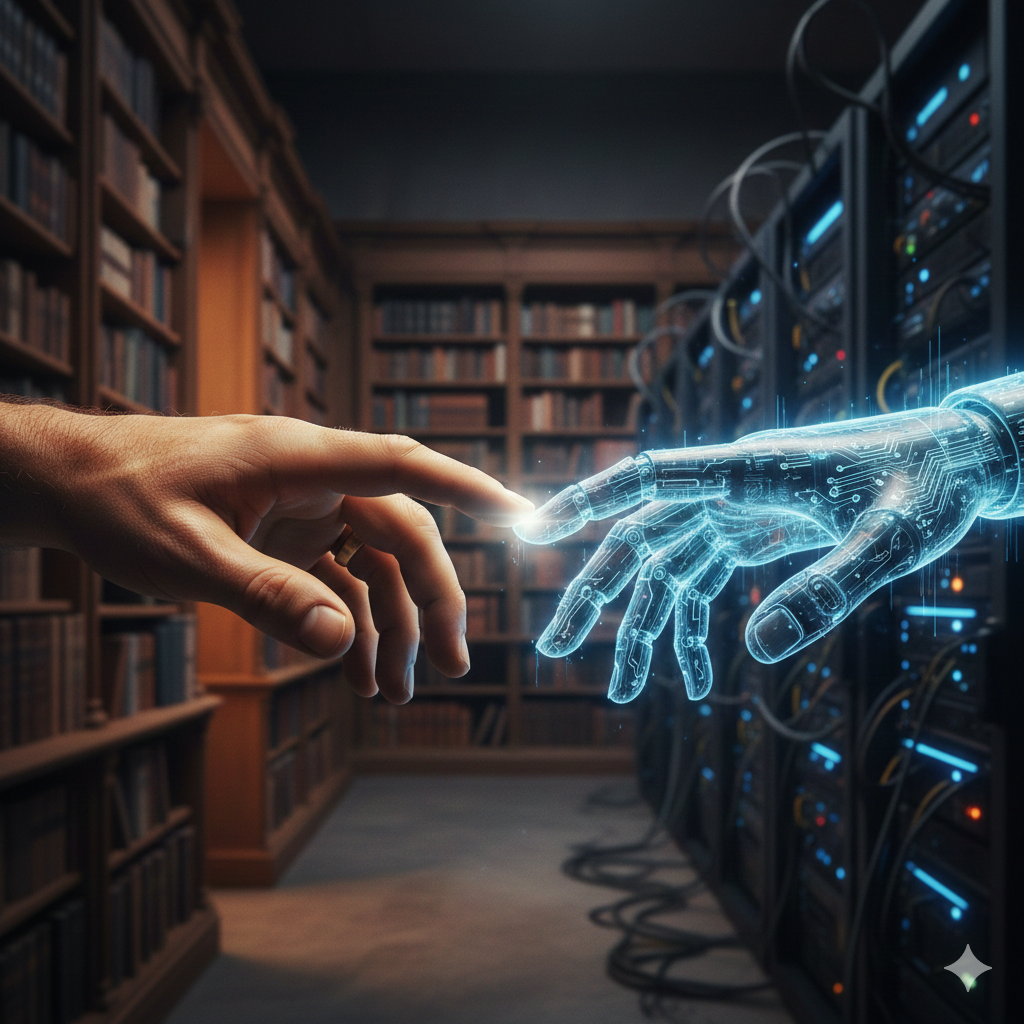
We are standing on the precipice of the greatest cultural shift since the invention of language itself. Artificial Intelligence is no longer just a tool sitting on our desks; it has infiltrated the very fabric of our existence, rewriting the rules of how we create, communicate, and define ourselves as human beings.
This is not a drill. This is not a futuristic sci-fi scenario. It is happening right here, right now, in the devices you hold and the content you consume. We are passively watching as the definition of “culture”—the shared tapestry of human experience, emotion, and history—is being subtly, yet radically, altered by non-sentient code. The urgency to understand and act upon this realization cannot be overstated. If we remain passive consumers, we risk losing control of our own narrative.
The Erosion of Authenticity: What Happens When Machines Create?
For millennia, culture was the exclusive domain of human struggle, triumph, and emotion. Art, music, literature, and philosophy were born from the depths of the human psyche.
Today, we are facing an existential crisis of creativity. Generative AI models are churning out symphonies, award-winning photographs, and novels in seconds.
While technologically impressive, this forces us to confront uncomfortable truths. If a machine can replicate the style of Rembrandt or the prose of Hemingway without ever feeling love, loss, or pain, what is the true value of human creation?
We risk drowning in an ocean of mediocrity—a deluge of “good enough” content that mimics human emotion without ever possessing a soul. The danger here is the devaluation of genuine human effort. When the artificial becomes indistinguishable from the authentic, we lose the ability to connect deeply with one another through shared artistic expression. We are outsourcing our imagination to a statistical prediction model.
The Algorithmic Echo Chamber: The Fragmentation of Shared Reality
Culture relies on shared experiences—the water cooler moments, the national debates, the collective consciousness. AI-driven personalization is dismantling this foundation.
The algorithms that govern your social media feeds, news sources, and entertainment choices are not designed to challenge you or broaden your horizons. They are designed to optimize engagement by feeding you exactly what you already believe.
This creates hyper-personalized reality tunnels. We are no longer living in the same cultural world as our neighbors. We are isolated in digital silos, surrounded by comforting echoes of our own biases. This fragmentation erodes empathy and makes collective societal progress nearly impossible. How can we have a unified culture when we cannot even agree on basic facts because our AI overlords show us different versions of the truth?
The Crisis of Purpose: Redefining Human Value
Perhaps the most terrifying aspect of the AI cultural revolution is the questioning of human purpose. If AI can write better code, diagnose diseases faster, and even provide better therapeutic advice than humans, what is left for us?
Our culture has long defined self-worth through labor and contribution. As AI displaces cognitive labor, we face a massive identity crisis. We must urgently shift our cultural values away from productivity and toward attributes that machines cannot replicate: genuine empathy, complex ethical reasoning, deep philosophical inquiry, and the raw chaotic beauty of human connection.
If we fail to redefine what it means to be valuable in a post-AI world, we risk a societal collapse where vast swaths of the population feel obsolete and purposeless.
The Urgent Call to Action: Becoming Architects, Not Victims
We cannot turn back the clock. Luddism is not a strategy. The only viable path forward is proactive, aggressive adaptation. We must stop being passive recipients of AI culture and become its active shapers.
We need to demand transparency. We must know when we are interacting with a machine and when we are engaging with a human.
We need to prioritize human-centric education. We must double down on teaching critical thinking, emotional intelligence, and the humanities—the very things algorithms lack.
We need to guard our authenticity. We must consciously seek out human-created art, engage in difficult conversations outside our echo chambers, and value the flawed, messy process of human creation over polished algorithmic output.
The future of human culture is hanging in the balance. It will either be a renaissance where AI augments human potential, or a dystopian landscape where humanity is reduced to merely prompting machines that simulate life.
The choice is ours, but the window to make that choice is closing rapidly. Do not just read this. Wake up. Think Critically. Assert your humanity.